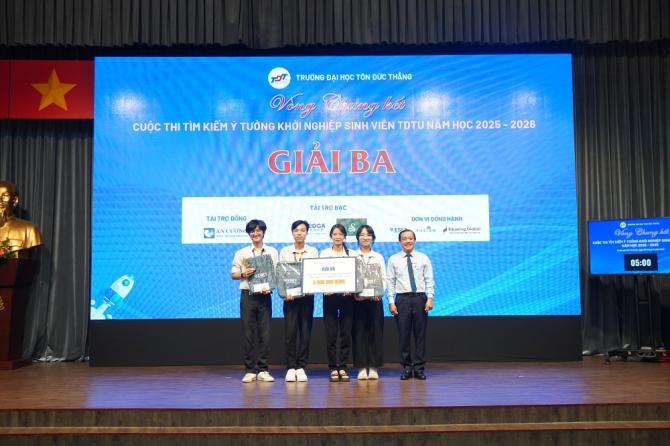
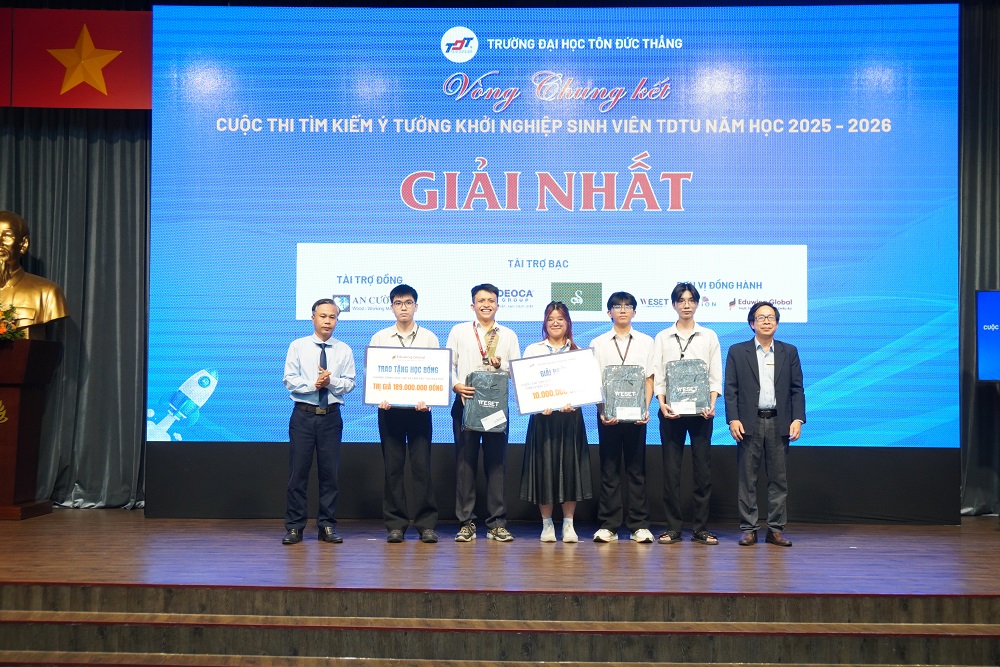
Students from the Faculty of Electrical and Electronics Engineering, Ton Duc Thang University (TDTU) win First Prize with a UAV-based fine dust monitoring solution
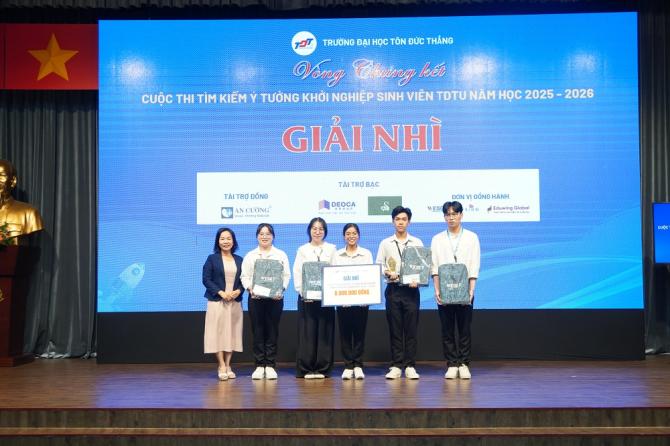
On the afternoon of January 8, 2025, Ton Duc Thang University organized the Final Round and the Closing & Award Ceremony of the “TDTU Student Startup Idea Search Competition for the 2025 - 2026 academic year.” As an annual activity of the University, the competition not only provides a platform for students to foster innovation and entrepreneurial thinking, but also encourages the transformation of academic knowledge into solutions with practical application value.
This year’s competition attracted the participation of more than 200 students with 43 projects from 14 faculties and the Khanh Hoa Branch, spanning five key thematic areas. The scale and quality of the participating projects demonstrated the growing interest of TDTU students in innovative entrepreneurship, particularly ideas oriented toward sustainable development and addressing pressing social issues.
At the Final Round, the First Prize was awarded to a team from the Faculty of Electrical and Electronics Engineering with the project titled “Drone-based Local Fine Dust Monitoring and Mapping System,” developed by students Pham Anh Khoa, Le Dinh Khanh, Phan Bao Tin, Le Phu Bao, and Ho Cao Bao Tran, under the supervision of Dr. Tran Thanh Nam, Lecturer of the Faculty of Electrical and Electronics Engineering, TDTU. The project was highly appreciated by the Jury Panel for its strong scientific and technological content, innovative approach to environmental monitoring, and clear practical applicability, effectively addressing the urgent need for air pollution control in today’s urban areas.
A technological solution for spatial and altitude-based fine dust monitoring
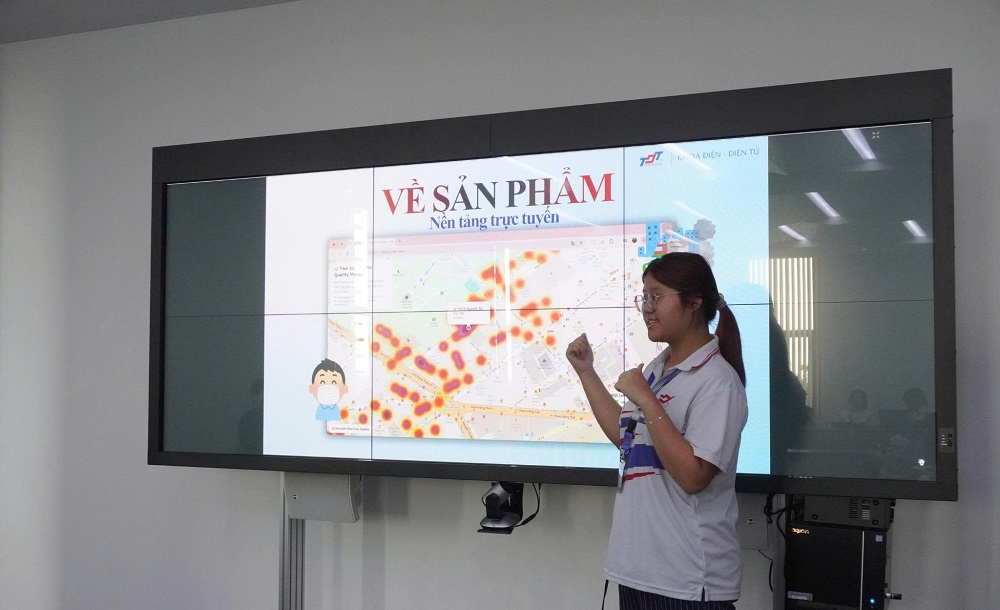
The project was developed to overcome the limitations of conventional fixed air monitoring stations, which typically collect data only at ground level and are unable to fully reflect the three-dimensional spatial distribution of fine dust. The research team integrated unmanned aerial vehicles (UAVs) with PMS7003 optical laser dust sensors and a 2D digital spatial mapping platform, enabling the real-time collection, visualization, and analysis of fine dust data at different altitudes.
All measured data are synchronized online to a visualization system, allowing users to easily observe, compare, and assess air quality in specific areas, thereby providing a more accurate representation of pollution levels within urban environments.
High applicability and strong potential for practical deployment
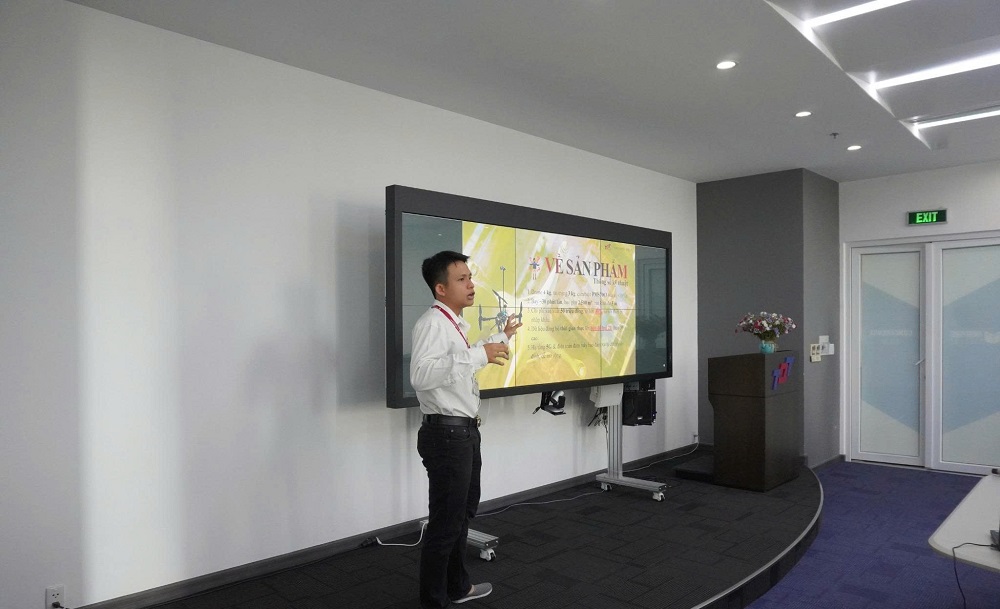
The project’s key strength lies in the development of a mobile monitoring system capable of measuring fine dust concentrations at multiple altitudes, rather than relying on fixed stations with limited coverage. The collected data are processed to generate intuitive fine dust distribution maps, reflecting fluctuations in air quality across urban areas, construction sites, or major traffic intersections.
By mastering UAV control technology and automated data collection, the project demonstrates high potential for real-world application in pollution monitoring. It can support environmental management agencies in the early detection of pollution hotspots, while also providing reliable data sources for urban planning and scientific research.
Toward technological autonomy and sustainable development
With implementation costs approximately 60 - 70% lower than imported systems, the project aims to promote “Made in Vietnam” technological self-reliance in the field of environmental monitoring. Beyond its economic value, the solution makes a meaningful contribution to efforts to mitigate air pollution, protect public health, and enhance quality of life in urban areas.
Sharing insights into the project journey, team representative Pham Anh Khoa stated: “We feel extremely fortunate and proud that our research efforts over the past period have been recognized with the highest award at the ‘TDTU Student Startup Idea Search Competition for the 2025 - 2026 academic year.’ This achievement would not have been possible without the dedicated guidance and mentorship of Dr. Tran Thanh Nam, who has accompanied us from the very first steps of the project. We would also like to express our sincere gratitude to our lecturers, families, and friends, who have always been a strong source of encouragement. In the coming time, our team aims to further enhance the operational stability of the UAV system while upgrading data processing procedures to develop more detailed and visually intuitive fine dust distribution maps. We hope that the project will soon have opportunities to collaborate with relevant organizations for pilot implementation, becoming a reliable reference data source for air quality management. Our greatest aspiration is to see the project’s contributions bring about positive changes to the living environment and help protect public health.”
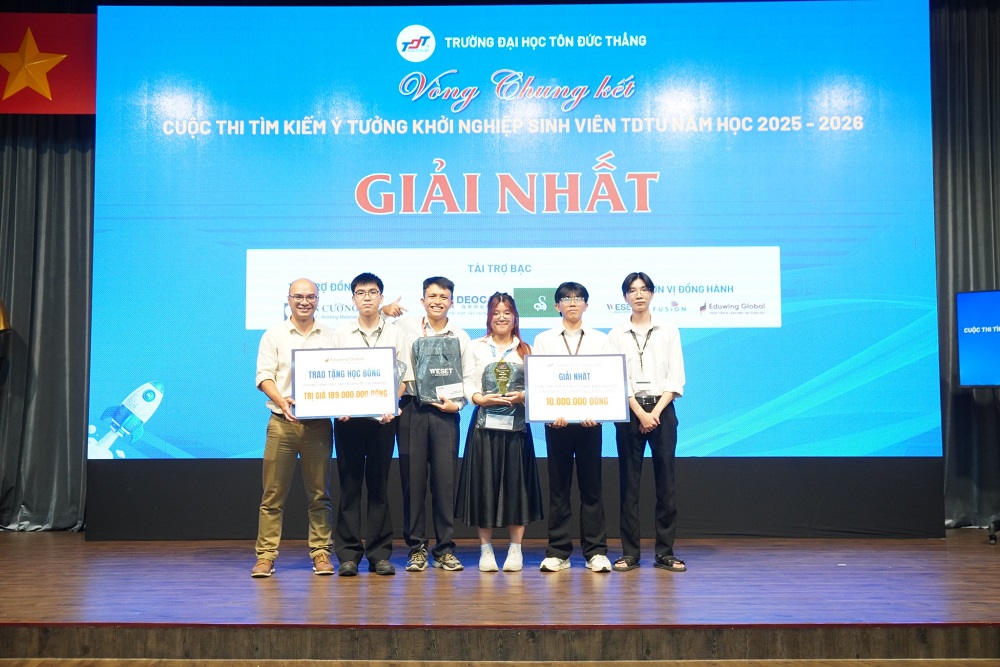
The First Prize achievement serves as clear evidence of the research capacity, innovative spirit, and applied science and technology competence of students at Ton Duc Thang University. At the same time, it opens opportunities for the project to be further refined and implemented in practice, contributing to the development of sustainable urban environments in the future.