CITT organizes a Training Workshop on Patent Registration Guidelines for TDTU Lecturers and Researchers
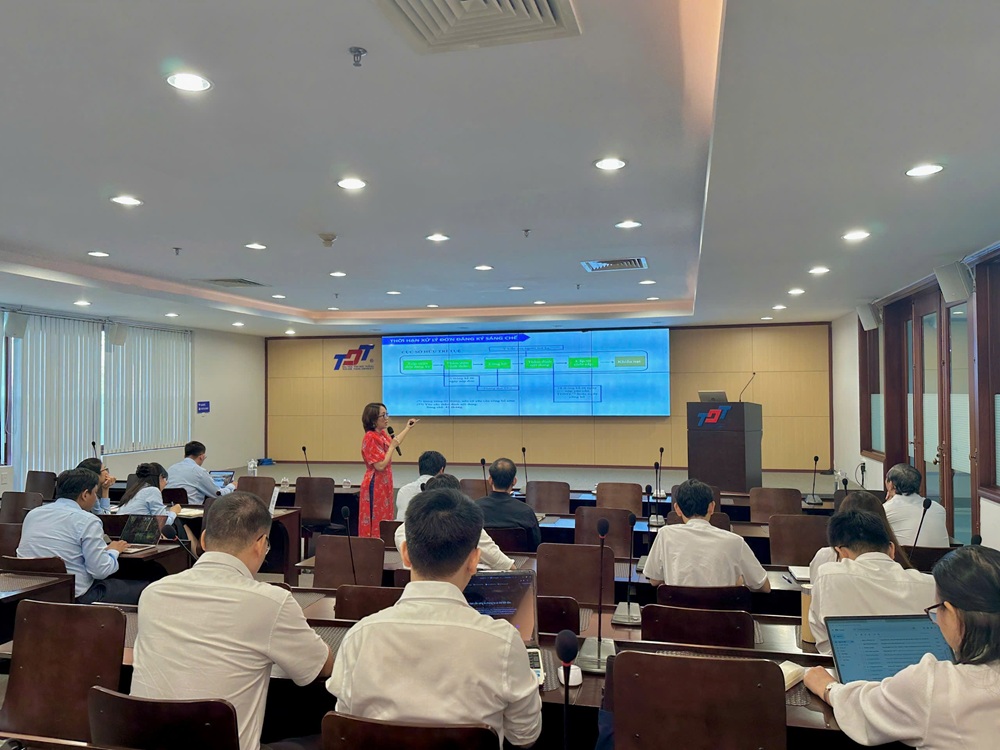
On the morning of October 16, 2025, at Hall A0403, Ton Duc Thang University (TDTU), the Center for Innovation and Technology Transfer (CITT) successfully held a Training Workshop on Patent Registration Guidelines with the participation of representatives from various Faculties, Institutes, and Centers of the university.
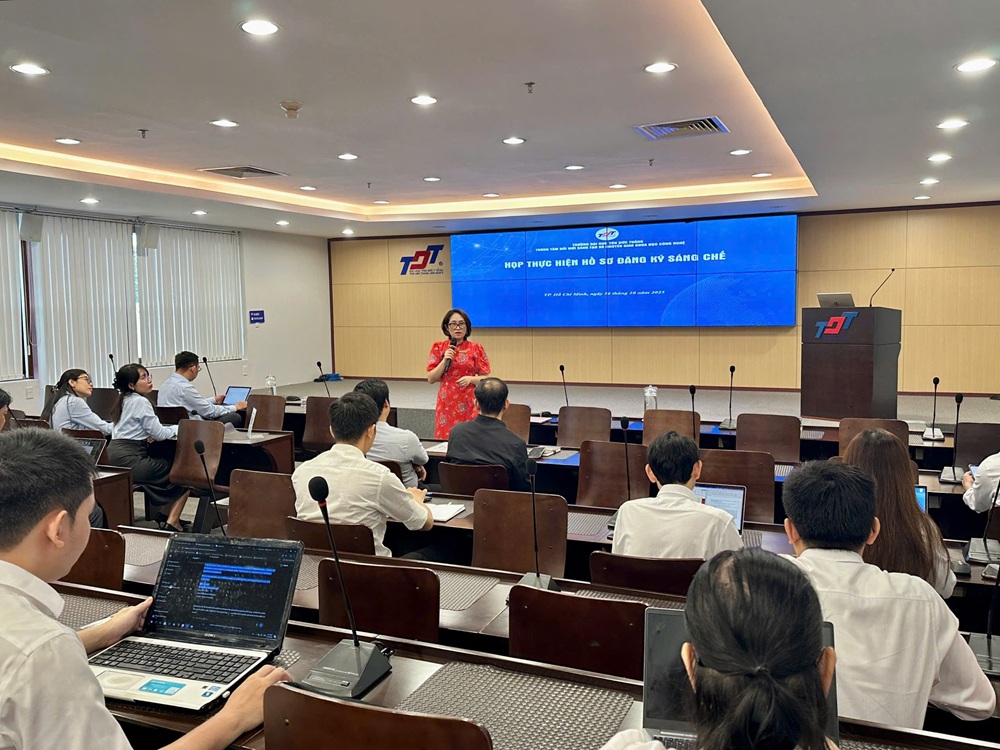
The workshop aimed to raise awareness and provide practical knowledge about the process and documentation required for patent registration, helping lecturers and researchers better understand the steps, rights, and responsibilities involved in intellectual property protection. This activity also concretizes TDTU’s orientation toward science–technology development and innovation, contributing to the effective implementation of Resolution No. 71-NQ/TW dated August 22, 2025, issued by the Politburo, which emphasizes promoting innovation, scientific research connected with practical applications, and commercialization of research outcomes.
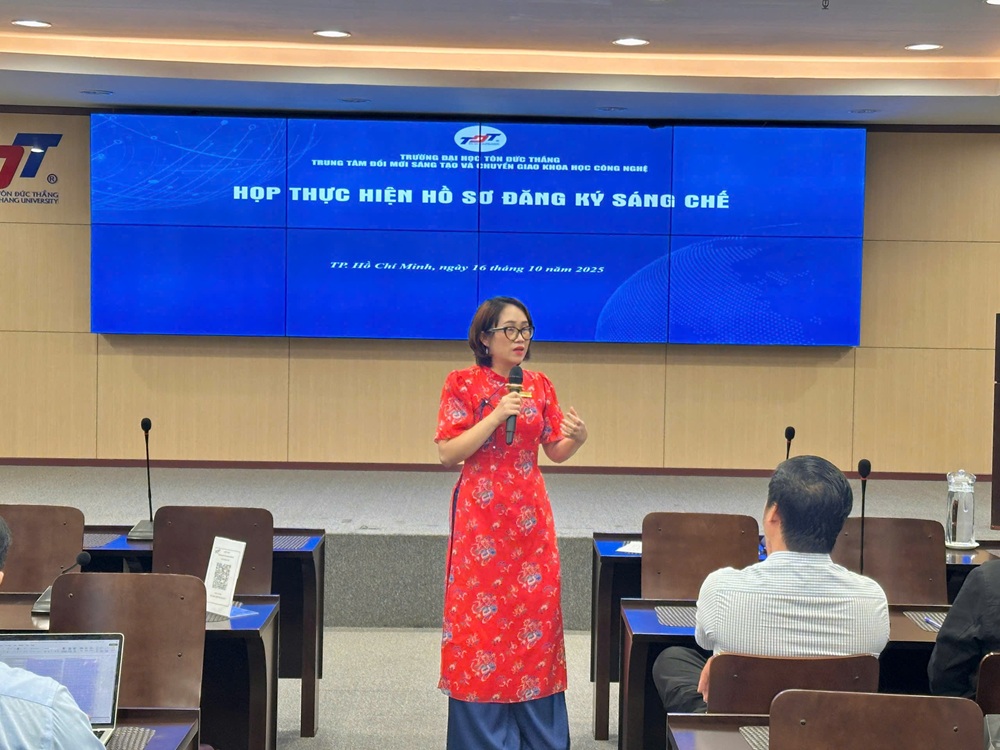
Dr. Duong Thi Thuy Van, Director of the Center for Innovation and Technology Transfer, directly led and presented the workshop’s content. Drawing on her expertise and practical experience, Dr. Van delivered valuable insights, clear guidance, and realistic perspectives to help participants master the steps of effective and compliant patent registration.
During the session, Dr. Duong Thi Thuy Van emphasized: “Patent registration not only helps protect the research achievements of lecturers, researchers, and scientists but also represents a strategic step in promoting innovation and affirming Ton Duc Thang University’s academic reputation.”
CITT is committed to accompanying and supporting TDTU lecturers and researchers through technical and legal consultation, aiming to increase the number of successfully registered and transferred patents. This contributes to enhancing the practical value of research projects and fostering a culture of innovation throughout the university.
The workshop concluded in a lively and constructive atmosphere, with numerous insightful exchanges and discussions. The activity not only helped lecturers and researchers better understand the legal and technical procedures for drafting a Patent Description, but also opened new directions in intellectual property protection and research commercialization. Through this initiative, the workshop helped inspire innovation, elevate academic reputation, and realize the spirit of Resolution No. 71-NQ/TW on sustainable development in science, technology, and innovation.