[IP 3] Conditions for Copyright Protection under the Law on Intellectual Property
(Based on Articles 13, 14 and 15 - Vietnam Law on Intellectual Property)
In the era of rapidly growing digital content, where creative ideas can be disseminated instantly, copyright serves as a crucial legal mechanism to protect the value of creative works. Properly understanding the conditions under which a work is eligible for copyright protection not only enables creators to proactively safeguard the results of their intellectual labor but also helps ensure that the exploitation and use of works comply with Vietnamese law.
1. Subjects eligible for copyright protection
According to Article 13 of the Law on Intellectual Property, an author is the person who directly creates a work through their own intellectual labor. A copyright owner is an organization or individual that lawfully holds the rights to a work, which may be the author themselves or a party to whom the rights have been transferred in accordance with the law.
Copyright protection applies to:
- Vietnamese organizations and individuals whose works are created by themselves or lawfully owned;
- Foreign organizations and individuals whose works are first published in Vietnam, or published in Vietnam within 30 days from the date of first publication in another country;
- Works of foreign organizations and individuals protected under international treaties to which Vietnam is a contracting party.
Accordingly, copyright protection does not depend on the nationality of the author but on whether the work meets the protection conditions prescribed by law.
2. Types of works eligible for copyright protection
Article 14 of the Law on Intellectual Property provides a diverse system of works eligible for copyright protection, including:
- Literary and scientific works, textbooks, teaching materials, and other works expressed in written form or other characters;
- Lectures, speeches, and other oral presentations;
- Journalistic works;
- Musical works;
- Theatrical works;
- Cinematographic works and works created by methods similar to cinematography (hereinafter collectively referred to as cinematographic works);
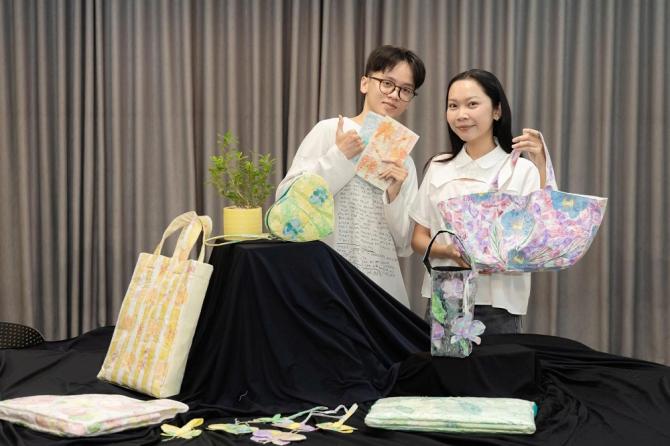
- Fine art works and works of applied art;
- Photographic works;
- Architectural works;
- Sketches, diagrams, maps, and drawings related to topography and scientific works;
- Folk literature and art works;
- Computer programs and data compilations.
In addition, derivative works are also protected by copyright, provided that their creation does not prejudice the lawful rights and interests of the authors or owners of the original works.
To be protected, a work must be directly created by the author through their own intellectual labor, must not be copied, and must not unlawfully use the content of others.
3. Objects not eligible for copyright protection
According to Article 15 of the Law on Intellectual Property, certain objects fall outside the scope of copyright protection, including: purely factual news reporting current events; legal normative documents, administrative documents, other documents in the judicial field, and their official translations; as well as processes, systems, methods, concepts, principles, and data.
These objects are general, normative, or technical in nature and do not bear individual creative expression; therefore, they are not protected under the copyright regime.
4. Core conditions for copyright protection
Based on the above provisions, a work is eligible for copyright protection when it fully satisfies the following basic conditions:
- It is directly created by the author through their own intellectual labor;
- It demonstrates creativity and bears the author’s personal imprint;
- It is expressed in a certain material form;
- It does not fall within the categories excluded from protection under the law.
5. Significance of properly understanding protection conditions
A thorough understanding of copyright protection conditions enables authors, researchers, enterprises, and creative organizations to proactively protect their intellectual assets while lawfully using the works of others. In the context of digital transformation and increasingly deep international integration, this serves as an essential foundation for minimizing disputes, safeguarding legitimate rights, and promoting sustainable creative development.
Currently, the Center for Innovation and Technology Transfer is receiving patent registration dossiers from individuals, lecturers, researchers, and enterprises.
For further information, please contact:
Center for Innovation and Technology Transfer - TDTU
Address: Room F.0104 - No. 19 Nguyen Huu Tho Street, Tan Hung Ward, Ho Chi Minh City
Phone: (028) 3776 0653 - 037 246 1275 (Contact: Quế Trân)
Email: citt@tdtu.edu.vn
Facebook: https://www.facebook.com/citt.tdtu/